

Funding a FairPlay account from Visakhapatnam
The evening I got this properly wrong, I was standing at a mirchi bajji cart on Beach Road with sand blowing across the pavement and maybe forty minutes left before the toss. Half the city seemed to be out on that stretch between the submarine and Kali temple, and every last one of them had a phone in their hand. My wallet had nothing in it, which was nobody's fault but mine.
I opened the deposit screen, typed ₹500, chose UPI and watched the wheel turn. The bank's SMS came through within a few seconds. The wallet stayed at zero. So I did the thing everybody does the first time, which was to pay a second time.
That second payment is the reason this page exists. Nothing had gone wrong with the first one. It was crawling through a tower on the beachfront that a few thousand other phones were leaning on at exactly the same moment, and it turned up on its own about four minutes later, by which point I had two deposits sitting in an account I had only meant to put ₹500 into. Understanding what the tap actually sets in motion would have saved me the trouble.
What actually happens in the seconds after you tap Pay
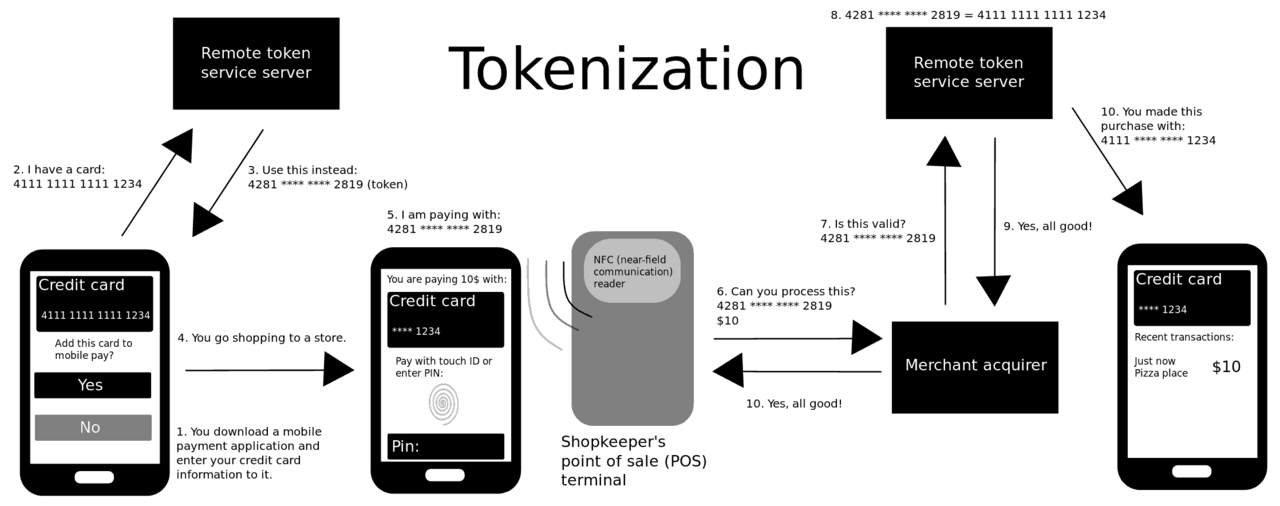
A deposit is not one action. It is three separate systems agreeing with each other in sequence, and each of them can be quick or slow independently of the other two.
The first step happens here: your tap creates a payment request carrying an amount and a reference that belongs to your account alone. The second step happens on your phone, when that request is handed across to PhonePe, Google Pay, Paytm or whichever UPI app you keep your bank inside. You type the PIN in that app. It never travels to us and it never should — a genuine deposit gives you no opportunity to type a UPI PIN on any screen except your own.
The third step is your bank taking the money and confirming it, first back down the UPI rails and then onward to us so the wallet can be updated. The SMS you get from your bank fires at the beginning of that last leg, not the end of it. That single fact explains almost every panicked message support receives. A debit alert proves your bank moved the money. It does not yet prove the confirmation completed its round trip.
On the beach that night, the confirmation was the slow part. Coastal evenings in Visakhapatnam put an enormous number of people onto a small number of towers, and salt air and sea wind do the signal no favours either. The money was never at risk. It was just queueing, in much the same way the share autos were queueing at the junction behind me.
Deposit before the toss, not during it
The practical lesson from that evening has nothing to do with which payment method you pick. Put the money in while you are still somewhere with a solid connection, and do it early.
If you are heading up to the ACA-VDCA ground at Madhurawada for an international, fund the account at home in MVP Colony or Seethammadhara before you get in the auto. The road out along the coast is a lovely drive and a patchy one, and the ground itself on a full night is thirty thousand handsets fighting over the same spectrum. The same holds for a Ranji match, for a monsoon evening when the Bay is throwing a depression at the coast and everybody is indoors on their phones, and for any big IPL night when the whole of Dwaraka Nagar is watching the same over.
One more habit that costs nothing: keep a second UPI app on your phone pointed at a different bank account. Banks take their systems down for maintenance at odd hours, and when yours is having a bad night the fix is usually not a different amount or a different method but a different bank entirely.
Pay from an account that carries your own name
The bank account or UPI ID the money comes from has to match the name registered on your account. A transfer out of your wife's account, your father's account or a friend's phone cannot be credited to you. It has to be returned, which means support, forms and several working days instead of a handful of seconds.
This catches people in exactly one situation, and it is a sympathetic one. Your own UPI is refusing, the match is starting, and the fellow standing next to you says he will send it and you can settle up later. That is precisely the moment to say no. The rule is not arbitrary — withdrawals only ever travel back to an account in your own name, so the money has to come in through the same door it will eventually leave by.
One payment, then patience
When the bank has debited you and the wallet is still empty, every instinct says try again. Ignore the instinct.
If that first payment was merely slow, a second one leaves you with two deposits and a reversal to arrange. If the first genuinely failed, the second will almost certainly fail in the same place for the same reason, because whatever refused it a moment ago has not changed its mind. Either way you are worse off than if you had simply waited.
Fifteen minutes is the number to hold in your head. Wait that long, read what your UPI app says about the payment, then match your situation to a row in the table above. The overwhelming majority of these resolve without anybody doing anything at all, and nearly all of the rest need one message carrying one reference number.
The UTR is the only thing worth screenshotting
After a UPI transfer goes through, your app shows a receipt with a twelve-digit code on it. Some apps call it the UTR, some print RRN, some just say reference number. They are the same thing.
That code identifies one payment out of the millions moving across the rails that day. Without it, tracing a deposit means searching on an amount and an approximate time, which is slow and sometimes ambiguous. With it, somebody looks at your exact transaction and tells you where it is. Screenshot it on every deposit, keep the screenshots in a folder, and the day you actually need one you will be glad the habit was already there.
The account does not care which pin code you open it in
Nothing about your balance is tied to Visakhapatnam. The account belongs to you rather than to a city, so the same wallet, the same minimums and the same methods are waiting whether you are in Gajuwaka, in Vijayawada for a wedding, on the overnight train up to Hyderabad, or working a contract in another state for six months.
Sign in and everything is where you left it: the same balance, the same saved payment routes, the same open bets. There is no regional version of the wallet to switch between and no separate account to open when you move. FairPlay India covers how the platform works nationally, including the payment rails that everybody uses regardless of where they sit.
The one thing that does travel with you is your phone, because your UPI app lives on it and so does your sign-in. Change your number and you will want to update the account before you next try to put money in, not at the moment you are already trying.
If you have not opened an account yet
Everything above assumes you already have somewhere for the money to go. If you do not, the sequence is short. Opening an account takes a few minutes and needs a mobile number you can receive an OTP on — see FairPlay register for the full walkthrough. Coming back afterwards is the same phone number and password each time, and FairPlay login covers what to do when that stops working.
Do the verification early. There is a strong temptation to leave identity checks until the day you first want to take money out, and that is the worst possible day to discover your address proof has expired or the name on your bank account is spelt differently from the name on your account here. Get it done on a quiet afternoon and withdrawals are dull thereafter, which is exactly what you want them to be. The account ID page explains what counts as acceptable documentation.
Nobody below eighteen should be putting money into a betting wallet, and the identity checks exist in part to enforce that.
The messages that are genuinely trying to rob you
Deposits are where fraud clusters, because that is where the money is. Three patterns turn up again and again, and all three fall apart the moment you know what a real deposit looks like.
The first is the forwarded bonus. It arrives in a family group or a cricket group, promising a deposit offer far richer than anything published, with a link to claim it before it expires tonight. The link goes to a page dressed up to look like this one. Real offers are on the bonuses page and appear on your own deposit screen when you are signed in. If an offer only exists inside a forwarded message, it does not exist.
The second is the phone call. Somebody rings claiming to be support, says a deposit is stuck, and asks you to read out the OTP that has just arrived so they can release it. Nobody here will ever ask for an OTP, a password or a UPI PIN, on a call or in a chat. An OTP is the last lock on your account and reading it aloud is handing over the key. Hang up, and if you are genuinely unsure, reach support yourself through the site rather than through a number somebody gave you.
The third is the payment link, usually on Telegram or WhatsApp, sometimes from an account calling itself an official agent. Pay them, they say, and they will load your wallet at a better rate. Every legitimate deposit starts inside your own account and finishes inside your own UPI app. Money sent to a stranger's UPI ID is simply gone, and because you sent it deliberately no bank is going to reverse it for you.
One test covers all three. A real deposit is something you begin. If someone else began it, or is standing over you while you finish it, stop.
Deposit limits, and why the delay is the whole point
Buried in the account settings is a control that lets you cap how much you can deposit in a day, a week or a month. It is the most useful switch on the site and almost nobody touches it.
A cap applies the moment you set it. Raising it does not — that takes a cooling-off period before the higher figure comes into force. People occasionally read that delay as an obstruction. It is the entire feature.
A limit you choose on a calm Sunday afternoon in Siripuram is a decision made by one version of you. The version wanting to raise it at half past eleven, three wickets into a collapse, is not the same person and should not get to overrule the first one on the spot. The waiting period simply makes sure the calm version wins. Responsible gaming runs through the full set of controls, and support will set one for you in about a minute if the settings screen is not to hand.
Where the money goes once it is in
There is one balance and it covers everything. The same money funds sports betting and every table in the casino, with no shuffling between wallets and no second account to keep topped up.
A worked example, with the price invented purely for the arithmetic: say you fancy a side in a cricket match and the odds are 1.80. A ₹500 stake returns ₹900 if it lands, which is your ₹500 back plus ₹400 of profit, and returns nothing if it does not. That is the whole calculation, and it is worth doing before you place a bet rather than after, because it tells you what you are actually risking rather than what you hope to win.
Coming back out, withdrawals from a verified account normally reach the bank in under ten minutes. That speed depends almost entirely on the verification being finished in advance, which is the argument for doing it on a quiet day rather than an urgent one.
A short list for the walk to the ground
Fund the account before you leave the house. Use UPI unless you have a specific reason not to. Pay from an account in your own name. Screenshot the UTR. If the money vanishes, wait fifteen minutes and read your UPI app before doing anything else. Never send a second payment to fix the first. Set a deposit limit while you are calm about it.
Follow those seven and the deposit stops being something you think about at all, which is the correct amount of attention to give it. You want your evening on Beach Road spent watching the cricket, not refreshing a wallet balance next to a bajji cart.