A December night in Jalandhar, fog already sitting low over Model Town, and five of us round one phone at the back of a sports-goods workshop watching Dabang Delhi take on Puneri Paltan. Delhi opened at 2.05 and Pune at 1.80, and by the eighth minute neither number meant what it had meant at eight o'clock. That is FairPlay kabaddi: raid points, super raids, super tackles, handicaps and all-out markets, with in-play odds that jump the instant a defence drops to three men. Bets start at ₹100.
Learn this table and every kabaddi market makes sense
Nothing on the board is priced off goals or overs. Seven scoring events run the entire sport, and every market you will see is built on top of them.
Pro Kabaddi scoring — what earns a point and when
Action
Points
When it happens
Touch point
1 per defender
The raider lays a hand or a foot on defenders and still makes it home over the midline
Bonus point
1
The raider steps past the bonus line with at least six defenders still standing on the mat
Tackle point
1
The defence holds the raider on their own side of the line until the whistle goes
Super tackle
2
Three defenders or fewer are left, and those few still keep the raider from getting back
Super raid
3 or more
One trip across the line comes back carrying three points or better
All out
2 bonus
All seven of a side are out at once; that side then returns to the mat at full strength
Do-or-die raid
Nothing, or out
Two empty raids have already gone, so this raider scores or walks off the mat
The all out is the row to memorise. Two bonus points reads like a rounding error until you picture what follows it. One side is putting seven men back on a mat they have just been swept off, reorganising a defence on the move, against opponents who have spent the last three minutes doing exactly what they wanted. The scoreboard records two. The next four minutes usually record considerably more than that.
Thirty seconds a raid, and the clock keeps running. Across forty minutes that adds up to something near eighty separate chances to score — a density most sports never come close to.
Betting Markets
Eight markets on every PKL match
A PKL fixture opens with roughly forty markets attached to it. These eight are where almost all of the real money ends up.
Pick a side to back, or lay the one you think is overrated. Group-stage games are allowed to finish level, and the rule printed on the market tells you if a tie hands your stake back or settles as a loss. Read that line before you confirm.
Points
Total Match Points
Both scores added together, over or under a line. A single all out drags that total around by something like eight to twelve points by itself, which is why the number jumps rather than drifts once a side gets thin.
Raiding
Total Raid Points
Only points won crossing the line count here, either for a whole side or for one named raider. Tackles and all-out bonuses are excluded, so a team can take the match comfortably and still land under this line.
Specials
Super Raid
A straight yes or no on whether any raid in the game brings back three points or more. The moment either defence is reduced to three men on the mat, the yes price collapses, so the time to take it is before that happens.
Defence
Super Tackle
Two points for a tackle completed while the defence is down to three or fewer. Sides built around a settled pair of corner defenders produce these at a much higher rate than sides that keep rotating the position.
Handicap
Points Handicap
The weaker side starts with a points cushion and you bet on the adjusted result. It is the market to use when a table-topper meets a struggling side and the plain winner price is far too short to bother with.
Player
Highest Raider
Whoever finishes with the most raid points, settled from the league's own match sheet. The price is usually slowest to catch up when an understudy has taken over the main raiding duty because the first choice is injured.
In-play
All Out in Match
Will either side be wiped out at least once during the forty minutes. By the time a team is down to its last two players on the mat the answer is close to decided, and the odds show it.
The League
Twelve franchises, twelve cities
No other Indian league spreads itself across the map like this one, and that reach explains a good deal of the betting volume it pulls in every winter.
The twelve PKL sides listed A to Z, with the city each one plays out of
Four steps to get a bet on, and a third one that most people skip to their own cost.
Open a FairPlay accountA phone number and the OTP that lands on it. No documents need uploading before your first raid-points bet goes on.
Add moneyUPI through PhonePe, Google Pay or any app you already keep on the home screen. PKL bets start at ₹100, so a modest first deposit lasts a whole week of fixtures.
Watch the first five minutesKabaddi shows its hand early. Whether a defence is gripping or slipping is obvious by the eighth minute, and the price at that point is far better informed than anything published before the toss.
Take your priceBlue column to back, pink to lay. These markets step rather than slide, so once you have made up your mind, confirm before the next raid resets everything.
A kabaddi night in Jalandhar, and what it teaches you
The workshop is off one of the lanes in Basti Danishmandan, where half the street has been stitching sports goods for three generations. Balls, gloves, netting, and yes, mats. On a winter evening the shutters come halfway down around eight, the small heater goes on, and whatever is playing gets propped against a tin of leather offcuts. That December it was Dabang Delhi against Puneri Paltan, streaming on a phone with two bars of signal, the GT Road traffic muffled by fog outside.
Nobody in that room had read a preview. What they had instead was twenty years of watching men raid, mostly on ground pitches rather than mats, and an instinct for when a defence has stopped talking to itself. Delhi were the longer price at 2.05. Pune were 1.80. Within four raids the older man sitting nearest the heater said Pune's left corner was late twice already, and he was not looking at odds when he said it.
What actually happens when a defence drops to three
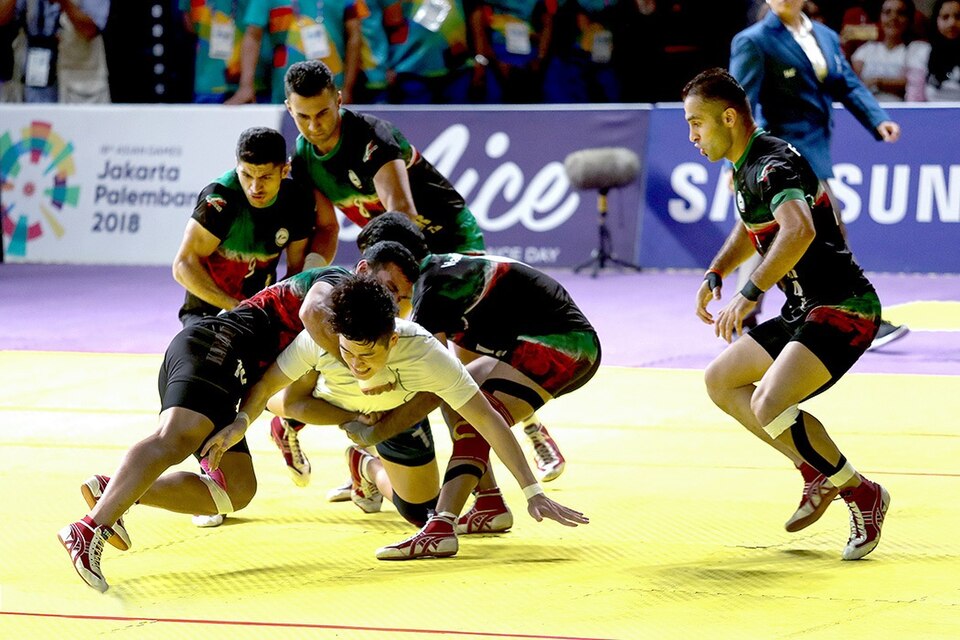
Here is the sequence, because it is the single mechanic worth learning properly. A side starts each half with seven players on the mat. Every raider they lose to a tackle sits out, and only comes back when their own team scores. Lose four and you are down to three. That is the number everything hinges on.
At three defenders, two rules switch on at once. The defending team becomes eligible for a super tackle, worth two points instead of one, so their reward for holding goes up. But the mat is now enormous for three men to cover, so a raider who gets past the first hand can touch two more and walk home with a super raid. The same moment makes both markets live, pulling in opposite directions, and the prices move in steps rather than sliding.
That night it happened to Pune around the twelfth minute. Somebody in the workshop said "teen reh gaye" before the on-screen graphic caught up, and the price on Delhi had already come in. Once a team is at three, the all-out market is close to answered and anyone who wanted a price on it needed to have taken it earlier. If you are watching a stream that runs eight or ten seconds behind the venue, assume the number moved before you saw the reason.
Counting empty raids costs nothing and tells you everything
Two raids in a row that bring back nothing, and the third is do-or-die: score or the raider is out. This is the only genuinely predictable pressure point in the sport, and you can see it coming a full minute ahead simply by keeping a tally on your fingers.
What follows depends entirely on the defence facing it. Sent in against seven fit men who are set and communicating, a do-or-die raid usually ends in a tackle point. Sent in against four, it often ends in a super raid instead. Same compulsory raid, two completely different outcomes, and the difference is visible on screen before the raider has crossed the line. Most of the people betting on that match are not counting.
Left corner, right corner, covers, ins. Which of those four jobs a side is missing tonight will tell you more about the total points line than anything the league table is showing.
Corners set the total, raiders sell the tickets
Broadcast graphics belong to raiders and so do the shirt sales. What decides how a team's matches actually play out is the two men standing in the corners. A settled corner pairing means fewer raid points given away, more empty raids forced on the other side, more do-or-die situations and more super tackles. Every one of those effects pushes the match total downwards.
So a missing first-choice corner is not a minor team-news line, it is a different side from the one the opening price was built on. Kabaddi markets react to that news more slowly than cricket markets react to a spinner being rested, and the reason is simply that fewer people are looking. Check the announced seven. It takes a minute and it is the cheapest edge available on this page.
Raider form swings harder than you expect
Because one or two men carry most of a team's scoring, an individual dip hits far harder in kabaddi than in a sport with eleven contributors. A raider in touch can drag a mediocre side through three fixtures on his own. The same man a fortnight later, hesitating half a step at the line, takes the entire attack down with him.
Highest raider and total raid point markets tend to trail that change by a match or two, and the lag is longest when an understudy has taken over because the first choice is hurt. That gap is where the value sits, and it shuts the moment the change becomes obvious to everyone watching.
Punjab watches this sport from a different angle
Look at the franchise table above and you will notice something about it from here: there is no Punjab side. Twelve cities, and the nearest is Sonipat. Which means people in Jalandhar tend to follow a raider rather than a team, and often a raider from a village two districts away who ended up at Patna or at Bengaluru.
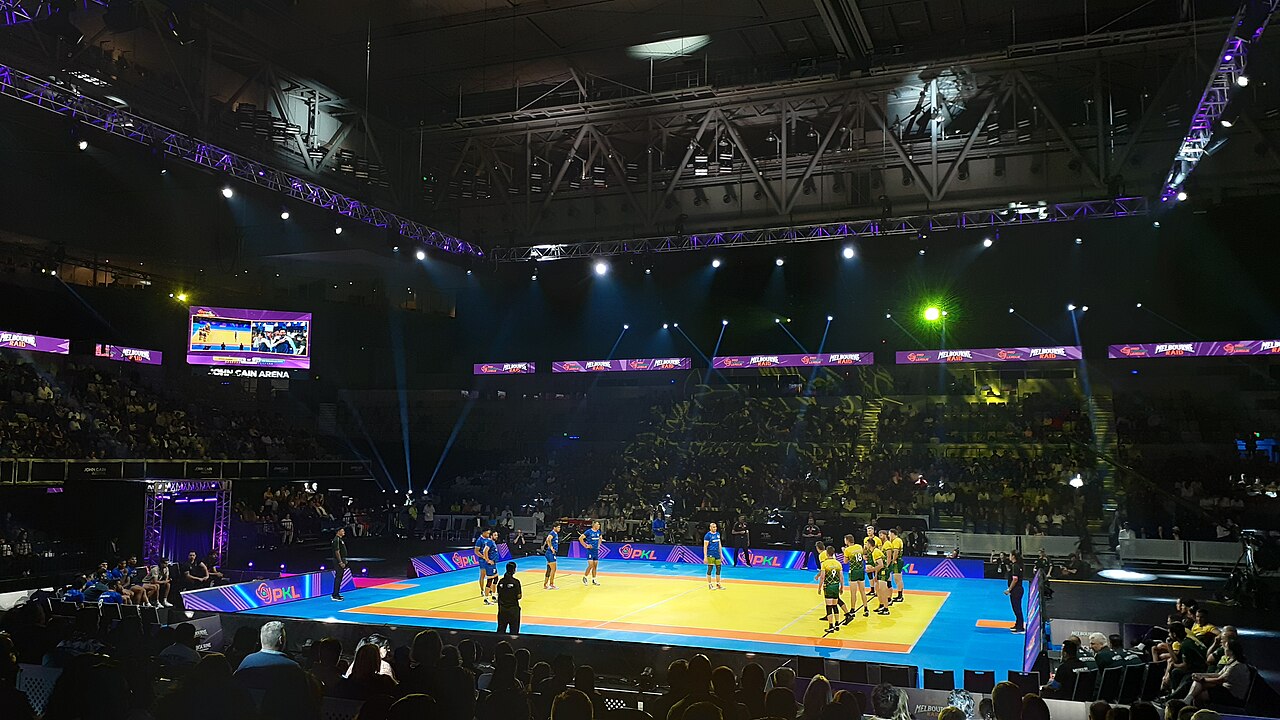
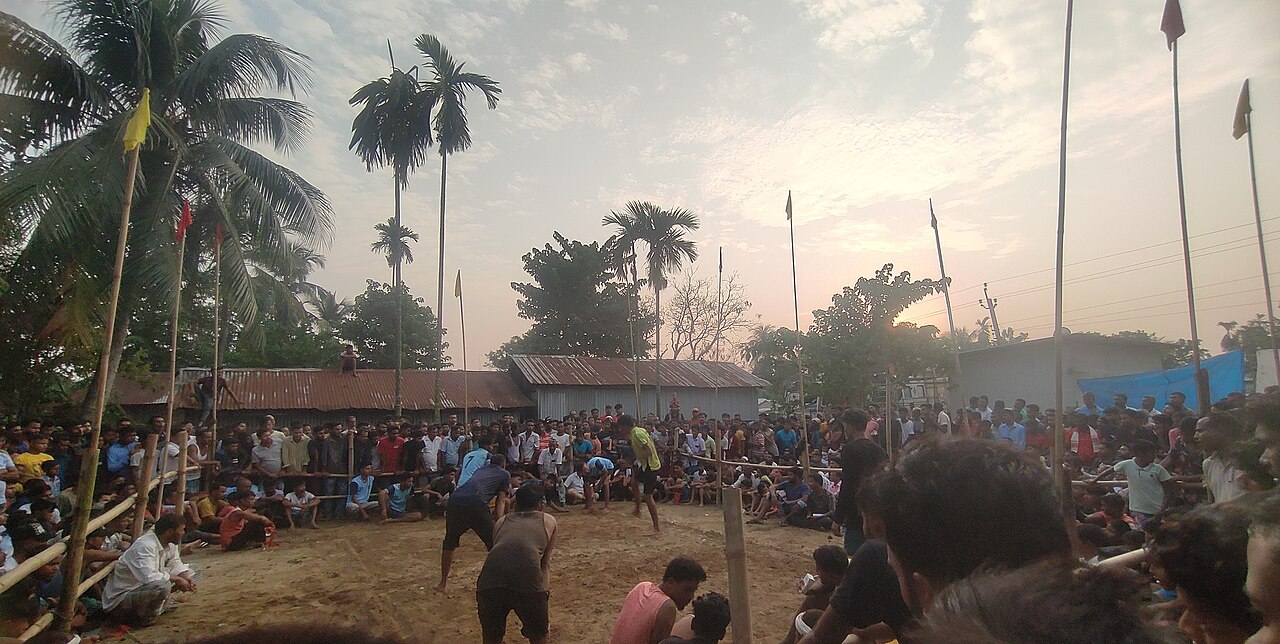
It also means the kabaddi most people here grew up on is not the kabaddi being priced. Circle style, played through the winter on tournament grounds across the Doaba, is a round pitch with one defender at a time, no lobbies, no bonus line and no mat. Standard style, the PKL version, is seven a side on a mat with all the rules in the table further up. They share a name and very little else. Bring circle-kabaddi instincts to a total raid points market and you will misprice it, because the two games reward completely different things.
The upside of the local habit is real, though. If you spend January evenings watching tournament kabaddi in and around Jalandhar, you have an eye for a raider's footwork that no statistics page will give you. That is worth more in this sport than in any other one on the site, because the markets are thin enough for a good eye to still matter.
The account is the same in Jalandhar as it is in Jaipur
Nothing about the board changes with your postcode. The prices loading in that workshop off the Basti lane are the prices loading on a phone in Kochi, the ₹100 minimum is the same, the ₹25,000 ceiling on a league fixture is the same, and the withdrawal comes back to a bank account exactly the way it does anywhere else. One login, one wallet, and it follows you.
That matters more than it sounds, because Doaba families are scattered. Somebody watching in Jalandhar in December is often watching from Ludhiana in March and from Pune by the following season, and none of that requires touching your account settings. Deposits run over UPI apps you already have. The FairPlay India page covers how the same account behaves state to state, and the app keeps your open bets in one place while you are moving.
If you have not opened an account yet
Start with a phone number. A FairPlay register form wants that and an OTP, nothing more, and you can be looking at tonight's kabaddi board within about two minutes. Documents come later, at withdrawal, not before your first bet.
Fund it small the first time. ₹500 buys you five bets at the ₹100 floor, which is plenty to watch a couple of PKL nights and work out whether you can actually read a defence or only think you can. Use the same UPI ID you use for everything else, because money going out has to come back to an account in your own name and matching details save you a delay later.
After that, coming back is just a FairPlay login away, and the board opens on the fixtures that are live now. Do not put your first stake on a playoff night. Put it on a Tuesday league match nobody cares about, where you can afford to be wrong while you learn what the numbers do.
The messages that arrive at half time
Kabaddi attracts a particular kind of nuisance, and it is worth naming. Somewhere around the interval, a WhatsApp forward or a Telegram invite turns up claiming inside knowledge on tonight's match. Sometimes it is a screenshot of a winning slip. Sometimes it is a man in a village near you offering a "confirmed" result for a fee.
None of it is real. Nobody is selling you a fixed kabaddi match for ₹2,000, because if they genuinely knew the result they would bet it themselves rather than retail it to strangers. The screenshots are trivially edited. The groups work by sending opposite tips to two halves of the list, so half the members always see a winner and the operator only advertises to them.
Two harder rules. Never install a kabaddi "prediction" app from a link in a forwarded message, and never read an OTP out to anybody, including anybody claiming to be from support. A genuine support conversation never needs your one-time password, and the only place your money should ever move is your own screen. If a message creates urgency, that urgency is the product.
Limits, settlement and knowing when to stop
League fixtures run from ₹100 to ₹25,000, with the playoffs lifted above that. Those ceilings are lower than the cricket ones because the pool is smaller, and that same thinness is exactly what leaves room for someone who watches the sport closely. You cannot have the soft prices without the smaller limits.
Player markets settle from the league's official statistics rather than a broadcast overlay, so a raid point that looked contested on screen follows the record sheet. Group-stage matches can finish level and each market spells out its own tie rule before you commit. Returns land in your wallet at settlement, and a withdrawal from a verified account is normally in the bank inside ten minutes.
One last thing, and it is the one that actually keeps this enjoyable. PKL season is long, it runs five nights a week, and a habit built in November is still running in February. Set a deposit limit before the first whistle rather than after a bad Thursday — responsible gaming explains where those controls live. Bet what a cinema ticket costs, not what the month's bills cost. You must be 18 or over.
FAQ
Kabaddi betting questions
Written for people who already understand a raid and want the betting side explained properly.
How do I actually get a bet on a Pro Kabaddi match?
Register, top up over UPI, then choose a PKL fixture off the board. What you will find priced there is match winner, total match points, total raid points, super raid, super tackle and a points handicap. Stakes run from ₹100 up to ₹25,000 on a league night. Because odds keep moving while the mat is live, you can also wait, watch a few raids, and bet once you have a read on which defence is actually holding.
What is a super raid in kabaddi?
Any single raid that returns with three points or more counts as a super raid. It nearly always arrives when the defending side is already short of bodies, because a raider then only has to reach three men who are spread too far apart to cover for one another. FairPlay runs it as a simple yes-or-no market across the whole match, and the yes side shortens sharply as soon as either team is down to three on the mat.
Why does a super tackle count double?
A defence reduced to three players or fewer that still manages to stop the raider is awarded two points rather than one. The rule exists so a side being pulled apart has a real way back rather than a slow slide to an all out. For a bettor the useful part is that it is not evenly distributed: teams with an established corner pairing convert these far more often, and over a season that difference shows up plainly in the total points market.
What does conceding an all out really cost a side?
More than any other single event. The side that gets wiped out gives away two bonus points and then brings all seven players back on, so the game restarts with the swing already banked and one team in rhythm. Conceding two of them is close to unrecoverable, because that is a ten to fifteen point gap in a sport where winning margins are usually much narrower. On the total match points line, one all out is generally worth eight to twelve points.
What is a do-or-die raid?
Two raids in a row that bring nothing back make the third compulsory: the raider has to score or he is out. It is the one moment in kabaddi you can see coming, which makes it the most useful thing to track while a match is live. Sent in against a full seven-man defence, a do-or-die raid very often ends with a tackle point and the momentum changing hands within the same minute.
Which kabaddi competitions can I bet on?
The whole Pro Kabaddi League calendar, all twelve franchises, right through the eliminators and qualifiers to the final, where the ceilings are lifted. Outside PKL there are kabaddi events at the Asian Games, the Kabaddi World Cup, circle-style Punjab kabaddi, and a selection of state and national championship matches that fill the gap once the league season closes.
What happens to my bet if the scores finish level?
It can, in the group stage. What happens to your bet depends on the market you took: some winner markets treat a level score as a void and return the stake, others list the tie as a third selection with its own price. Knockout matches cannot end level, because they go to extra time and then a golden raid. Every market states its own tie rule on screen before you confirm the bet.
What are the betting limits on kabaddi?
A regular PKL fixture takes anything from ₹100 to ₹25,000, and the playoff nights go higher. Those ceilings sit below the cricket ones for a plain reason: fewer people bet kabaddi, so there is less money waiting on the opposite side of your bet to match it. The exact maximum is printed against each fixture on the board, so you can see it before you decide on a stake.
Can I bet on kabaddi from Punjab?
Yes. The account behaves the same in Jalandhar as it does in Jaipur or Patna: the same board, the same ₹100 floor, the same UPI apps and the same withdrawal route back to your bank. Punjab has no PKL franchise of its own, which is why so many people here end up following a raider rather than a team. Nothing about your location changes the odds you are shown or the limits you get.
Is circle-style Punjab kabaddi the same as PKL kabaddi?
No, and mixing them up will cost you money. Circle kabaddi, the version played on winter tournament grounds across the Doaba, has a round pitch, one defender meeting the raider at a time, and no mat, no lobbies and no bonus line. PKL uses standard style on a mat with seven a side. All the markets on this page — raid points, super tackles, all outs — belong to the standard game.