

Win
One runner, first past the post, nothing else counts. It is also the only bet on a card where the number on your screen is the number you get paid.
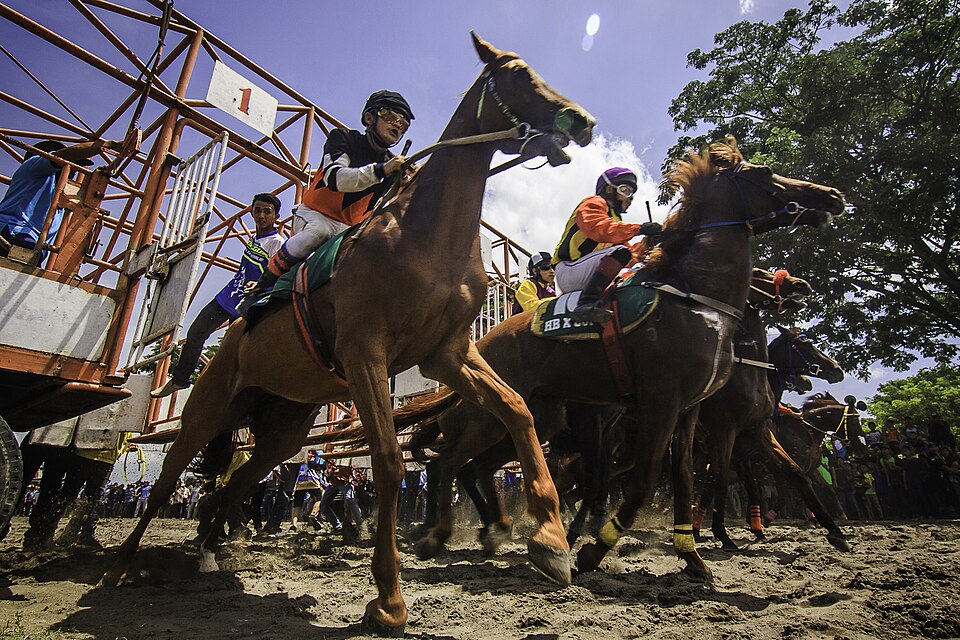
Indian & international cards
In Udaipur there is a roundabout named after a horse, and Haldighati is forty minutes up the road, so nobody here needs persuading that a horse can be worth arguing about. FairPlay horse racing is where that argument meets a price you can actually see before the stalls open. Begin with the each-way table further down. Of everything on a card, that is the bet that catches the most people out.
Next Off
Prices from the cards due off across the Indian clubs, with every time shown in IST.
Prices shown are illustrative
Mumbai — Race 4, 1200m TurfLive
Min 100 · Max 50,000
Bangalore — Race 2, 1400m Turf
Min 100 · Max 25,000
Min 100 · Max 25,000
Hyderabad — Race 3, 1100m Turf
Min 100 · Max 25,000
Min 100 · Max 20,000
Where The Money Goes
It is two bets, not one, so ₹1,000 each way takes ₹2,000 out of the balance. Here is what comes back at each price when the horse wins, and what comes back when it only makes the frame.
| Price | Returns if it wins | Returns if placed only | Profit if placed |
|---|---|---|---|
| 4.0 (3/1) | ₹5,600 | ₹1,600 | −₹400 |
| 5.0 (4/1) | ₹6,800 | ₹1,800 | −₹200 |
| 6.0 (5/1) | ₹8,000 | ₹2,000 | Break even |
| 7.0 (6/1) | ₹9,200 | ₹2,200 | +₹200 |
| 9.0 (8/1) | ₹11,600 | ₹2,600 | +₹600 |
| 11.0 (10/1) | ₹14,000 | ₹3,000 | +₹1,000 |
| 21.0 (20/1) | ₹26,000 | ₹5,000 | +₹3,000 |
Back a 4.0 shot each way, watch it run second, and you are ₹400 poorer. Read the top rows again. The place half is being asked to carry the entire ₹2,000, not merely its own ₹1,000, and at a short price it cannot manage that. Everyone standing around the phone will tell you the bet nearly came off. The balance says ₹1,600 came back out of ₹2,000, which is a loss wearing a rosette.
Read The Market First
The number of places a race pays, and the fraction it pays them at, both move with the size and type of field — and the break-even price shifts along with them.
| Field | Place terms | Places paid | E/W break-even |
|---|---|---|---|
| 2 to 4 runners | Win only | — | No place market |
| 5 to 7 runners | 1/4 odds | 2 | 5.0 or bigger |
| 8 or more, non-handicap | 1/5 odds | 3 | 6.0 or bigger |
| 8 to 11 handicap | 1/5 odds | 3 | 6.0 or bigger |
| 12 to 15 handicap | 1/4 odds | 3 | 5.0 or bigger |
| 16 or more handicap | 1/4 odds | 4 | 5.0 or bigger |
One line of arithmetic replaces the whole table. Take the number underneath the place fraction and add one. That is the price at which a placed horse gives you your money back. A quarter of the odds wants 5.0. A fifth of the odds wants 6.0. The sum takes about two seconds and it separates a bet from a donation. Terms are printed on the market itself, so read them instead of guessing — a nine-runner handicap and a fifteen-runner handicap settle on different fractions.
Bet Types
One horse to win at one end of the scale, and at the other the pool bets that give an Indian card its own vocabulary.
One runner, first past the post, nothing else counts. It is also the only bet on a card where the number on your screen is the number you get paid.
The horse has to finish in the frame rather than in front of it, and how deep the frame runs depends on the size of the field. Smaller returns, a great many more of them.
Half the stake on the win, half on the place, charged as one bet at double the size. Check the price against the table above first, because underneath break-even a placed horse still takes money off you.
First two home in the right order, or first three. Indian cards use tanala for the three-horse version, and on a busy Saturday the money behind that pool gets serious.
Find the winner of every race in a set sequence. Almost nobody manages it, which is precisely why the pool rolls forward into the next meeting and swells.
Take the other side of one runner's price and you have effectively backed everything else in the race. For a favourite you do not believe in, that is the cleanest way to say so.
Getting Started
Never used an exchange before? This is every click in order, with nothing skipped over.
The terrace looks out over Fateh Sagar from the Rani Road side. Late September, the lake still high after a decent monsoon, the Aravalli ridge behind it that startling green it manages for maybe six weeks a year before it gives up and goes brown again. My uncle had his phone propped against a steel tumbler. Mumbai, race four, twelve hundred metres on turf, off at quarter past two. Four of us, one phone, one packet of biscuits, and about forty minutes to make up our minds.
He has followed racing since the eighties, when it reached this part of Rajasthan as a column in the Sunday paper and a friend of a friend who knew somebody at a club six hundred kilometres away. What he never had in those days was the price sitting in front of him, moving, with the option of taking it or leaving it alone. That is the part that has genuinely changed. The favourite showed 3.10 to back and 3.20 to lay. The one under it showed 4.60 and 4.80. Not one of us had ever seen either horse run.
He passed on both of them and went for a runner further down the list, trading at 4.0, each way, ₹1,000. That is two bets, so ₹2,000 came off the balance straight away. Worth stopping on for a moment, because plenty of people carry the idea that each way is a ₹1,000 bet with insurance bolted onto it. It is not. It is ₹1,000 on the win and a separate ₹1,000 on the place, and the second one is charged whether you thought about it or not.
The race itself took a little over a minute. Our horse came wide off the turn, got past three of them in the straight and never quite got past the fourth. Second. There was a great deal of shouting on that terrace, some of it from the neighbours who had wandered over. Then the balance refreshed: ₹1,600 back against ₹2,000 staked, and the shouting stopped rather abruptly.
Here is the mechanism, and it is not complicated once somebody writes it down. At 1/5 place terms the place half returns your unit plus a fifth of the win odds. On a price of 4.0 that is one plus 0.6, so ₹1,600 comes back on the ₹1,000 place stake. Fine in isolation. The problem is that the ₹1,600 also has to cover the ₹1,000 on the win half, which went nowhere. Two thousand out, sixteen hundred in, ₹400 gone on a horse that ran the race of its life.
Move the price up and the whole shape of the bet changes. The same ₹1,000 each way on a 6.0 shot returns exactly ₹2,000 when it places: your money back, nothing more. At 11.0 a placed horse returns ₹3,000, which is ₹1,000 of profit on a runner that got beaten. That is the entire case for each-way betting. It belongs on prices large enough to carry the second stake, and it quietly drains you on prices that are not.
My uncle worked through it twice on the back of an envelope, which is a thing he still does, and concluded that he had been making that bet for thirty-odd years without anybody putting the sum in front of him. Probably true. The man taking bets has no reason to explain it, and the Sunday column never had the column inches.
There are two completely different ways a racing bet gets priced, and confusing them is the second most expensive mistake after each way. A tote is a pool. Every stake placed on that bet type goes into one pot, the club takes its deduction, and whatever survives is divided among the winning tickets. You learn what you won after the race has been run and the dividend declared.
This is why a heavily supported favourite can pay less than you expected while a horse nobody fancied pays a good deal more than its chance suggested. The crowd sets your return, not the form book. The deduction is also invisible at the moment you commit, which takes some getting used to if fixed prices are all you have ever known.
An exchange runs on the opposite principle. Somebody is offering 3.10 and somebody else is asking 3.20, and the moment you take one of those numbers it is yours. Money can pour in behind your horse, the price can halve in the last two minutes before the off, the going can change, and you are still on 3.10. The cost sits in commission on what you win rather than a slice taken off everybody's stake before anything is paid.
Forecast, tanala, jackpot and treble bets all run on the pool principle too, so the same warning applies — you are betting into a shared pot and the dividend depends on who else is in it with you. A tanala asks for the first three home in the correct order. It sounds like the hardest thing on the card and frequently is, but when the three market leaders oblige in the obvious sequence, a few thousand people are holding the same ticket and the payout can feel almost insulting.
The opposite case is why people keep playing them. A scrambled result leaves a handful of tickets sharing the entire pool. Jackpots nobody lands are carried into the next meeting and keep building, which is the reason those pools reward attention on a big Saturday and deserve none at all on a wet Wednesday with eight-runner fields.
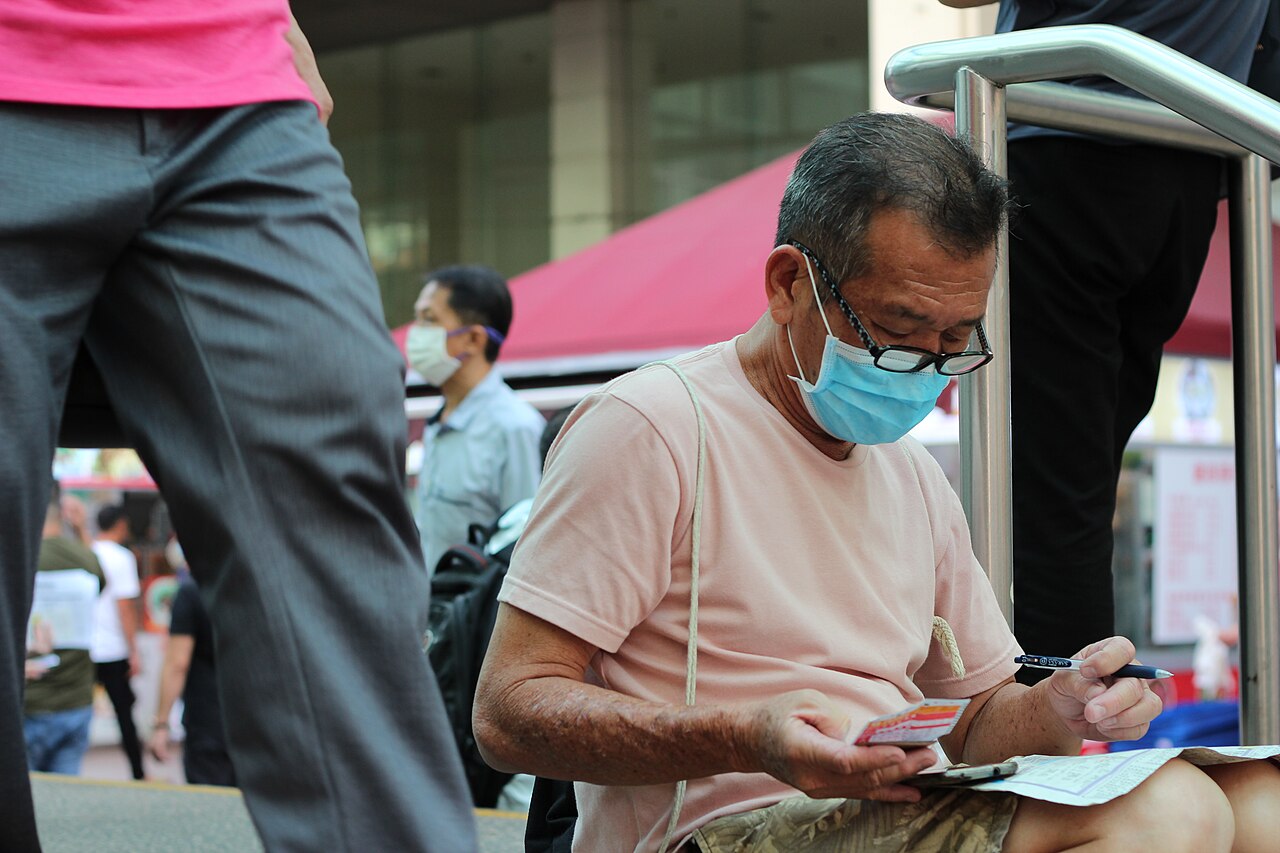
A race card is an intimidating object the first time you open one. Most of it can wait. Weight is the handicapper's published opinion of the horse in kilograms, and it is the most honest number printed anywhere on that page — a person whose whole job it is has decided that this animal is that much better than the one beside it.
The draw is the stall the horse jumps from. Over twelve hundred metres round a turning track it can settle the race before a jockey has done anything at all. Over a mile and a half it barely registers. Recent form tells you whether the horse is fit and interested at the moment. The going tells you whether today's ground suits it, and Indian tracks travel a long way between firm in February and genuinely soft after rain.
Jockey and trainer records fill in the picture, and now and then they settle an argument between two runners that look identical otherwise. For someone reading their first card, they very rarely overturn what those four columns already said. The uncle on the terrace reads them in exactly that order and has never been taught to. He arrived there by losing money in a different order for a few years first.
The Indian clubs stagger their seasons rather than fighting over the same dates, an arrangement that suits anybody watching from a city without a track. The western season takes the cool months, the southern clubs cover the summer heat, and the monsoon meeting fills the gap between them. Something is running most weeks of the year, and the heaviest days cluster between January and March. Udaipur has no course of its own, so the cards you watch from here belong to somebody else's city — and those cities have their own pages: Mumbai, Bangalore and Kolkata each keep their own venue and season detail.
People ask this often enough that it is worth stating flatly. There is no Udaipur version of the account and no Rajasthan version. The board on a phone propped against a tumbler on Rani Road is the board somebody else is looking at in Kochi or Guwahati — same races, same prices, same ₹20 minimum, same place terms printed on the same markets. The city you are sitting in changes nothing about what you are offered.
Your FairPlay login is built on a mobile number, and it travels. Sign in on the phone at the terrace, sign in on a laptop the following morning, sign in on a train somewhere between Udaipur and Ahmedabad — same balance, same open bets, same settled history in the same order. Money goes in over UPI from whichever app already lives on your phone, and it comes back out through the same banking section wherever the phone happens to be. FairPlay India sets out how that picture varies from state to state.
The only things that genuinely change with location are the ones that always change with location: your bank's own timings, the mobile signal on a bad monsoon evening when the clouds are sitting on the hills, and the law where you are physically located, which the last section covers.
None of this needs an account to read. Rather a lot of it is easier to check with one, because the place terms and the stake limits are printed on each market rather than tucked away in a help page. FairPlay register wants a mobile number and an OTP; the four steps sit a little way above this section with each click spelled out.
Start smaller than you feel you should. A ₹20 win bet on a race you have actually watched will teach you more than a ₹2,000 each-way bet on a horse whose name you liked the sound of, and it teaches the lesson for a fraction of the price. Set a deposit limit before the first bet rather than after the fourth one. Read the each-way table one more time, since it will save you the ₹400 my uncle paid for it. Then open a card, take a price, and find out what it feels like to know your return before the stalls have even opened.
Racing draws a particular sort of pest, and my uncle's number collected three of them inside a fortnight after he started looking at cards online. The pitch never changes much. A man who knows the connections. A horse being kept quiet for this one race. A fee for the name, payable now, before the race rather than after it, which is the detail that gives the whole thing away.
Ask the obvious question. Anybody who could reliably name winners would be backing them himself rather than selling them to strangers on a broadcast channel. The tells repeat: payment to a personal UPI ID instead of into your own betting balance; a group stuffed with screenshots of winners and no screenshots of losers; somebody claiming to be from support who wants your OTP, your password, or a transfer routed through a middleman so he can "arrange" your account. Support does not ask for an OTP. No deposit needs to travel through an intermediary. And no result was ever fixed by a man who could not spell the horse's name.
The honest version is duller. Nobody knows which one is going to win. The card tells you what the handicapper thinks, the market tells you what the money thinks, the place terms tell you what second place is worth, and then a race is run and you find out. Anyone offering more certainty than that is selling something, and it is not a winner.
Racing occupies a strange legal position in this country, and Haldighati being up the road has nothing to do with it. Indian courts have drawn a line between betting on horses and games of pure chance, on the reasoning that reading form, weights, going and a jockey's record is judgement rather than luck. That reasoning is a large part of why organised clubs have run here for well over a century.
Be precise about what it does not mean. A distinction drawn about the nature of the activity is not a general permission to bet. What applies to you depends on the law in your state and on where you are physically sitting, and that position has moved more than once and is still being argued over. Check what currently applies to you before you stake anything, treat all of this as background rather than legal advice, and note that accounts are for adults of eighteen and over. The India overview lays out the state-by-state picture, and responsible gaming covers the deposit and session limits worth setting on day one rather than day fifty.
FAQ
The arithmetic, the terms, the pools, and what a beginner should read first.
Two bets of the same size, charged together. One of them says your horse wins; the other says it finishes in the places. Ask for ₹1,000 each way and ₹2,000 leaves your balance. If the horse wins, both halves pay out. If it only places, the win half is gone and the place half pays at the win odds cut down by the place fraction.
Because the place half has to pay back the whole outlay, not just its own share of it. At 1/5 terms the place part returns one unit plus a fifth of the win odds, so it needs a price of 6.0 or better to cover two units of stake. A horse at 4.0 that finishes second hands back ₹1,600 against ₹2,000 staked, so you are ₹400 down on a run most people at the table would call unlucky. The general form is easy to carry around: at 1/f terms, break-even is f plus one.
That follows from the field. Two to four runners is normally win only. Five to seven pays two places at a quarter of the odds. Eight or more pays three, at a fifth in most races and a quarter in a handicap of twelve to fifteen. Sixteen or more in a handicap usually pays four places at a quarter. The terms sit on the market before you stake anything, and because they move the break-even price they deserve a glance every single time.
A tote is a shared pool. Every stake for that bet type goes into one pot, a deduction comes off the top, and the remainder is split between the winning tickets, so your price is unknown until the dividend is declared. An exchange is a fixed price agreed with another person, which means you know your return the second the bet is struck. The pool deduction is set by the club and is normally a good deal heavier than the commission an exchange charges on winnings.
It is the Indian name for picking the first three finishers in the correct order, a trifecta under another name. The two-horse version is a forecast. Both are pool bets rather than fixed price, so what you collect depends on the size of the pool and how many tickets are sharing it. A tanala that lands exactly as the market expected can pay far less than the difficulty of the bet would suggest.
Historically it has. Courts here have distinguished horse racing from games of chance, on the view that weighing form, weights, going and a jockey's record calls for skill and judgement. That reasoning is a genuine part of why the clubs have run for more than a hundred years. It is not the same thing as blanket permission, though. Your own position depends on the law in your state and where you happen to be located, it has shifted before, and it may shift again. Confirm what applies to you before betting and treat this as background rather than advice.
Weight, draw, recent form and the going, roughly in that order. Weight is the handicapper's assessment of the horse in kilograms. The draw decides a great deal over short trips on a turning track and almost nothing over a staying distance. Form shows whether the horse is fit right now, and the going shows whether the ground suits it. Jockey and trainer numbers are useful later on; they seldom contradict what those four columns already told you.
Most of the year, somewhere. The major clubs stagger their seasons instead of clashing, so the western season covers the cooler months, southern clubs take the summer, and the monsoon meeting sits in the middle of it. The arrangement means there is nearly always a card to look at, with the busiest and best-attended days falling between January and March.
Explore FairPlay